image of a compass
NDI

The National Democratic Institute is a nonprofit, nonpartisan organization working to support and strengthen democratic institutions worldwide through citizen participation, openness and accountability in government.

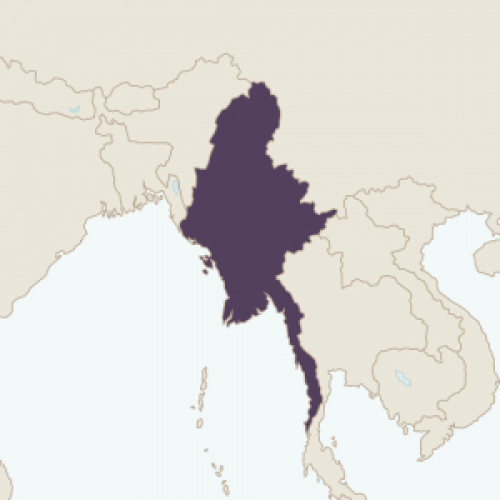
Burma

Burma page pic.png

On November 7, 2010, Burma held its first general elections in more than 20 years. The following week, the ruling junta released democracy activist and Nobel laureate Aung Sang Suu Kyi from house arrest. Despite what may seem like promising developments, Burmese democracy remains in a perilous state. Burmese exile groups and democracy activists have condemned the elections as a sham to reinforce military rule. The junta-backed Union Solidarity and Development Party (USDP) claims to have won 80 percent of the contested seats and reports of voter intimidation have been widespread. Furthermore, foreign media outlets were barred from the country prior to the elections and foreign observation was limited to a handful of junta-approved polling stations. Even some member countries of the Association of Southeast Asian Nations (ASEAN), who generally pursue a policy of strict noninterference, have condemned the Burmese elections as undemocratic.

Political freedoms have been virtually nonexistent since the State Peace and Development Council (SPDC) imposed military rule in Burma. In 1990, Daw Suu Kyi led the opposition National League for Democracy (NLD) to an overwhelming victory in Burma’s first democratic elections in 30 years, but the junta refused to honor the results and instead reasserted its repressive authority. In 2008, in the wake of the humanitarian crisis caused by Cyclone Nargis, the regime held a referendum on a new constitution, which was drafted by the military without open debate. The SPDC promised that the constitution would end military rule and restore multi-party democracy, culminating in the November 2010 elections.

Political Situation

In preparation for the polls, the regime launched a campaign praising the merits of the Burmese path to democracy. In April, the Union Solidarity and Development Association (USDA), the junta’s corporatist front, dissolved and transferred its assets and offices to the Union Solidarity and Development Party (USDP), a party formed by Prime Minister Thein Sein and 26 ministers and senior officials to take part in the November elections. Harassment, detention, and prosecution of regime critics continue, belying the government’s commitment to a restoration of democratic rule.

In May 2009, the junta imprisoned Daw Suu Kyi for allowing an uninvited American man respite in her home. She was sentenced to an additional 18 months of house arrest. As her original house arrest sentence would have expired in late May, many viewed the additional penalty as a thinly veiled attempt by the junta to extend her imprisonment until after the 2010 elections to ensure their victory. Her sentencing generated a tremendous international outcry, with countries such as the U.S. renewing economic sanctions. Several ASEAN members also issued statements condemning the arrest and verdict. Moreover, the ruling junta outlawed anyone with a criminal conviction from belonging to a political party. This law not only disqualified Daw Suu Kyi from participating in the national elections, but also required the NLD to expel its leader in order to participate.

Today, more than 2,000 political prisoners in Burma languish in jails, some with sentences of more than 65 years. Leading dissidents do not have access to the outside world and those activists who are free and living in Burma are at constant risk of being arrested, tortured, or executed. Given the junta’s tightening of political space inside the country, exiles and other members of the international community continue to ensure that Burma’s democracy movement stays in the spotlight.

Current Activities

NDI has supported international advocacy on Burma since 1995. Since 1998, NDI has worked with the exiled Burmese government National Coalition Government of the Union of Burma (NCGUB) to strengthen its outreach capacity and to increase coordination among the NCGUB, other exile groups, key international organizations, and international political leaders. NDI has also worked with the Euro-Burma Network (EBN), a coalition of more than 15 organizations, since its inception in 2003. Through coordinated advocacy, the network has successfully promoted a stronger EU position on Burma, including new sanctions imposed against the regime by the European Parliament in 2008. Previously, NDI worked with Promoting Democracy in Burma (PD Burma), and other partners to support an international celebration on the tenth anniversary of the awarding of the Nobel Peace Prize to Aung San Suu Kyi.

Recent NDI programming has focused on strengthening advocacy within the Asia region. NDI provides organizational support to Burmese exile organizations engaged in ASEAN-based efforts to advocate for democratic reforms in Burma. The ASEAN Inter-Parliamentary Myanmar Caucus (AIPMC), the Burma Partnership (BP), the Women’s League of Burma (WLB), and others are now reaching beyond traditional activist networks to build new coalitions for change and develop new modes of activism. Drawing upon its extensive regional network, NDI has facilitated cooperation among Burmese activists, regional parliamentarians, governments, and regional civil society organizations to gain stronger support from regional governments for human and political rights in Burma.

Responding to requests from the AIPMC and BP, NDI has provided technical assistance on organizational development. NDI has also provided financial assistance to the BP to strengthen its human resource and IT capabilities. In the wake of the November 2010 general elections, the Institute has been working with these groups to improve their coordination and political advocacy skills.

Funding

NDI's programs for Burma are funded by The National Endowment for Democracy (NED).

Contact Information

For more information about these programs, use our contact form or contact:

Burma
Stephanie Lynn, Resident Country Director
+62 21 310 7154 or slynn@ndi.org

Washington, D.C.
Lorri Carrozza, Senior Program Officer
(202) 728-5455

  Subscribe to updates about Burma