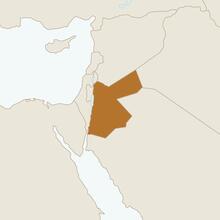
The Hashemite Kingdom of Jordan is a constitutional monarchy that has played a pivotal role in much of the Middle East's turmoil, including the Arab-Israeli conflict and the U.S. war in Iraq. The death of King Hussein — Jordan's long-time ruler and strongman in the region — in 1999, brought King Abdullah II to power. King Abdullah's many pledges for democratic reform led people both in and out of Jordan to believe that the country was on a path to greater democracy, increased government transparency and more opportunities for citizens to meaningfully engage in political life.
The last decade has shown modest signs of progress in Jordan. The country has held parliamentary and municipal elections at regular intervals. The participation of women as voters, activists, candidates and elected officials has grown dramatically. The capacity of Jordanian civil society organizations to advocate for more transparent and representative government institutions and policies has increased. In the 2007 elections, for example, civil society organizations led the country's first nonpartisan domestic election observation effort. The elections also witnessed an unprecedented number of women candidates, the election of the first woman member of parliament that wasn't mandated by a quota, a breakdown of traditional tribal politics and active youth participation.
Still, many significant challenges continue to hinder true democratic reform in Jordan. The 2007 elections revealed many of these challenges, such as a weak showing by political parties, a rise in the role of money in elections, and a general unwillingness by the government to address voting irregularities. The Jordanian parliament also remains a body comprised of individuals with tribal and business affiliations, rather than a venue for parties to debate issues and represent citizen interest. Laws governing elections, political and civic associations, and freedom of the press continue to limit the opportunities and activities of democrats and activists.
Building on modest progress and in response to ongoing challenges, NDI is working to help establish representative and sustainable political systems and institutions that are truly participatory, open, and trusted by the Jordanian people. NDI engages a diverse group of individuals and institutions in its programs and maintains a strong network of local partners in the country. The Institute's programs aim to strengthen the role of political parties, encourage transparency and accountability in parliament, support grassroots organizations and activists to empower citizens, and promote greater political participation by women and youth.
- NDI's Roula Attar talks to Living Well magazine about NDI's programs in Jordan and why women are so vital to the political process»
- Attar discusses democracy promotion at Brookings in Doha»
Women's Political Participation
NDI has worked with women in Jordanian politics for more than a decade, conducting training programs for women parliamentary candidates for every election cycle since 1997. In the 2007 elections, NDI trained a core group of over 50 women candidates. Out of the seven women elected that year, five were active participants in NDI programs. NDI also produced a book and documentary that profiled the first class of women MPs and senators who served in Jordan's parliament from 2003-2007 and produced a second documentary video focused on women candidates in the 2007 elections — made available to wide audiences in both English and Arabic.
- Accomplishments of Jordan's women legislators profiled in new NDI book and documentary film»
- Download and read the book in English or Arabic»
- Watch the documentary»
Women Helping Women
With support from the National Endowment for Democracy, NDI is managing the Women Helping Women (WHW) Network, an organization dedicated to supporting women's candidacies for elected office. The first network of its kind in the Arab world, the WHW Network's 600-plus members are committed to recruiting, supporting and funding viable women candidates, helping them build and run effective campaigns, training the next generation of political activists, and mobilizing voters to help elect women candidates across Jordan. WHW also aims to raise awareness of the importance of women's political participation and encourages Jordanian organizations to serve as support and resource groups for women who are active in politics. The WHW Network, which was launched in 2006, is supported by a coordination committee comprised of nine leading Jordanian women's organizations. To mark the second anniversary of WHW in April 2008, NDI hosted an expo event attended by over 130 women leaders and activists, including HRH Princess Basma Bint Talal, who delivered the keynote address.
In 2008, the WHW Network launched a speakers’ forum series that highlights women experts in various fields and provides a space for discussion and debate on a range of topics. Participants in the series have commended NDI and WHW for highlighting women who excel in their respective fields and recognized the program’s work in changing attitudes about women in Jordanian society. These monthly public forums on social and political issues have proven to be a useful vehicle for women in elected office and women activists to learn more about current policy issues, and have highlighted the importance of discussing legislative issues with civil society activists.
In an effort to promote the network, NDI worked with WHW leadership to produce a regular newsletter. The newsletter provides readers with a useful source of political information and education.