image of a compass
NDI

The National Democratic Institute is a nonprofit, nonpartisan organization working to support and strengthen democratic institutions worldwide through citizen participation, openness and accountability in government.

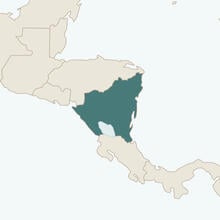
Public confidence in the impartiality of government institutions and the transparency of its electoral process has diminished markedly in Nicaragua over recent years, reversing progress toward consolidation of Nicaraguan democracy. Many Nicaraguan analysts attribute the decline to the negative influence of the “Pacto” – a nearly decade-old power-sharing arrangement between President Daniel Ortega of the Sandinista National Liberation Front (Frente Sandinista de Liberación Nacional, FSLN) and former President Arnoldo Alemán of the Liberal Constitutionalist Party (Partido Liberal Constitucionalista, PLC). Under the Pacto, electoral and judicial authorities are divided between the FSLN and the PLC on strict party lines, increasing the public perception that private and party ambitions rather than public interest guide their decisions.

Independent public opinion surveys conducted just after the 2006 election of President Daniel Ortega registered an increase in the level of satisfaction of Nicaraguans with the functioning of Nicaragua’s democratic institutions, reflecting general satisfaction with the integrity of the electoral process, regardless of the fact that President Ortega won with only 38 percent of the vote. However, the 2008 municipal election process, considered an important test for President Ortega, led to increased polarization and diminished confidence in the impartiality of electoral authorities. Nicaraguan election observation group Ethics and Transparency (Ética y Transparencia, ET) described the 2008 elections as “the least transparent and most conflictive elections since 1996.” Election authorities refused to provide domestic election observation groups, such as ET, credentials in order to observe these elections as they had done before. Major international observation groups invited to observe previous elections, like the Organization of American States and the European Union, were not invited to send observers. The elections were overshadowed by allegations of irregularities and fraud, which continue to affect support to Nicaragua by the international donor community.

The Supreme Court of Justice (Corte Suprema de Justicia, CSJ) dismissal of a 20-year jail sentence against Alemán has renewed speculation of secret negotiations between President Ortega and Alemán.  Some FSLN and PLC leaders have discussed moving forward with constitutional reforms to establish a mixed presidential-parliamentary system and to allow for consecutive presidential reelection. Nicaraguan civil society leaders have raised the need for other electoral and political reforms, including depoliticizing the electoral system, to help increase public confidence in advance of regional elections in 2010 and the 2011 presidential and legislative elections.

Political Party Strengthening

NDI is working to strengthen Nicaragua’s democracy by promoting constructive debate on political and electoral reform to increase public confidence in institutions and processes. Toward that end, NDI is engaging Nicaraguan young, reform-minded local political actors in Political Leadership Trainings on international experiences and political party best practices for strategies to become more transparent, democratic and responsive to citizen concerns.

Support for Civil Society

Working with the Institute for Development and Democracy (Instituto para el Desarrollo y la Democracia, IPADE), NDI will provide systematic, current data concerning Nicaraguan citizen views on issues affecting political participation through a new nationwide democracy survey. Information from the survey will support the Civil Society Working Group on Electoral Reform’s (Grupo Promotor de Reformas Electorales, GPRE) efforts to promote public awareness and debate about reforms.

Past Programs

Since 1990, NDI has worked to strengthen democratic institutions and practices in Nicaragua. In 1993, NDI convened an unprecedented public forum on civil-military relations with Nicaragua’s key political and military leaders, which led to agreements to reform the country’s military legislation and create a civilian-led ministry of defense.

In 1996, NDI began providing technical assistance to ET, Nicaragua’s first nonpartisan domestic election observer organization. In 2006, NDI supported deployment by ET of 12,000 Nicaraguan election observers for the presidential and legislative elections and provided technical support to conduct a parallel vote tabulation or “quick count” which helped to verify the integrity of the electoral process.

To enhance the capacity of the media to increase public awareness and access to information about the 2008 municipal electoral process, NDI joined efforts with The Carter Center to conduct workshops with Nicaraguan journalists. At these events, international and Nicaraguan specialists shared information on international standards for democratic elections and the role of the media in providing accurate and impartial coverage of electoral processes.

In 2008, NDI also provided support to ET and IPADE to verify the integrity of the municipal elections. Even without credentials to monitor the voting process from inside the polling stations, NDI’s partners collected information from outside polling stations in 146 municipalities regarding the administration of the election and the behavior of electoral actors. The Institute also assisted efforts by political parties to train their pollwatchers by sharing training materials and methodologies on topics such as the role, rights and responsibilities of pollwatchers in deterring irregularities.

Contact Information

For more information about these programs, use our contact form or contact:

Washington, D.C.
Emily White, Senior Program Assistant
(202) 728-6318

  Subscribe to updates about Nicaragua