Since its unification in 1990, Yemen has at times been at the forefront of Arab efforts to launch meaningful democratic reform and build a more representative and inclusive political system. Yemen is the first state on the Arabian Peninsula to enfranchise women and boasts a multiparty electoral system. Its political leaders, through actions and rhetoric, have created an expectation among Yemeni people that they should have a say in how the country is governed. Despite these accomplishments and a stated commitment to modernization and reform, events in recent years — including intermittent violent conflicts — have indicated continuing challenges to Yemen's democratic aspirations.
Lack of progress on reforms and a steady and significant decline in opposition party performance at the national level led citizens to question the legitimacy of the elected government. In February 2011, frequent protests escalated into a popular uprising driven by hundreds of thousands of unemployed or underemployed youth. Demonstrators initially called for greater job opportunities, better public service delivery and a more accountable government; as unrest gained momentum, protestors demanded that then-President Ali Abdullah Saleh, in office for 33 years, and his government resign.
The government responded by cracking down on demonstrators. After nearly 11 months of popular protests calling for his removal, Saleh signed the Gulf Cooperation Council (GCC) initiative and an accompanying set of implementation mechanisms on Nov. 23, 2011, transferring presidential authorities to Vice President Abdo Rabu Mansour Hadi. In accordance with the GCC agreement, a presidential election took place Feb. 21, 2012, to confirm uncontested Hadi as the president who would oversee a two-year transition. Following the election, attention shifted toward the remaining benchmarks outlined in the GCC agreement, including an inclusive National Dialogue Conference with the goal of revising the constitution before parliamentary and/or presidential elections take place in February 2014.
After several delays, Yemen is anticipated to begin the six-month national dialogue process on March 18, 2013, which will formally include 565 delegates, representing various political and civil society factions. At least 50 percent of the delegates will be from the south, and the technical committee for the national dialogue (TCND), formed by Hadi in May 2012 to outline a process for the dialogue, set a delegate quota of 30 percent for women and 20 percent for young people.
Active in Yemen since 1993, NDI's current programs focus on supporting an inclusive and transparent national dialogue and transition process. To encourage citizen participation in the transition, NDI is providing citizens with the knowledge and skills to make informed decisions on electoral and political reform. In a series of town hall meetings, the Institute has brought together men, women and youth from around the country to pose questions and discuss key issues being debated in the national dialogue with political leaders involved in the process. This unique opportunity to engage leaders directly and have a say in their country’s political process has allowed Yemenis not only to participate in democratic decision making before the dialogue, but also has given them a sense of collective ownership in the transition process.
Within this context, NDI is working with both nascent and established political parties to strengthen their knowledge of political and electoral systems and engage in cross-party debates about which systems would best contribute to re-establishing credibility and participation in Yemen’s political processes. NDI is also working with party leaders to ensure that women and youth members are integral in the process. Youth and women were at the forefront of the revolution in 2011, and their participation is fundamental to the legitimacy of the transition process.
One of the biggest challenges for the national dialogue is designing a process that will capture the views and opinions of Yemen’s more than 22 million citizens, the vast majority of whom are not affiliated with formal political organizations. NDI is working alongside the National Dialogue Conference secretariat to prepare delegates to participate in the dialogue through an orientation program focused on both the process and the core issues to be discussed. The Institute will continue to provide subject matter expertise related to governance issues addressed in the dialogue. In addition, NDI is assisting civic organizations organize public forums throughout Yemen on national dialogue issues and on avenues for providing input to the national dialogue process.
Political Context
The modern Republic of Yemen was born in 1990 with the unification of the Yemen Arab Republic (North Yemen) and the People’s Democratic Republic of Yemen (South Yemen). The new state, governed by a multiparty parliament and former president of the north, Ali Abdullah Saleh, struggled to unify the two countries’ economies and militaries. In a climate of mutual hostility and distrust, on May 21, 1994, leaders of the former South Yemen declared secession and the establishment of a new Democratic Republic of Yemen centered in Aden, but the new republic failed to achieve any international recognition. Saleh’s troops captured Aden in July, ending the brief civil war.
The civil war and reunification led to a period of further polarization between the north and the south. Saleh appointed members from his own party – the General People’s Congress (GPC) – to his cabinet and awarded ministry positions to other political parties that were loyal to him during the civil war. The Yemen Socialist Party, the former governing party of the south, expressed its dissatisfaction with the government by boycotting the 1997 parliamentary elections. Saleh insisted the elections continue without the participation of the YSP, and the GPC won 62 percent of seats in parliament, an increase of more than 20 percent.
In September 1999, Yemen held its first direct presidential election, reelecting President Saleh to a five-year term by an overwhelming margin. Constitutional amendments adopted in 2000 extended the president’s term by two years. Saleh was reelected in September 2006, in the nation’s first truly competitive presidential race, during which the opposition coalition Joint Meeting Parties (JMP) fielded former Minister of Oil Faisal Bin Shamlan. Bin Shamlan received 21.8 percent of the vote – an unprecedented showing for an opposition candidate in Yemen. Opposition parties fared less well in local council elections, which consolidated power for the president’s GPC party.
In October 2007, Saleh announced a package of comprehensive political reforms; however, many were not slated to take effect until after his term. Critics called into question both the president’s commitment to reform, as well as the prospects for implementation of the proposed package.
By early 2009, the ruling GPC and the opposition coalition of the Joint Meeting Parties (JMP) reached a political impasse, which ultimately delayed parliamentary elections for two years. Fomenting unrest across the country began to gain significant momentum the following year as demonstrators demanded equal employment opportunities, better service delivery and stronger local administrative authority. The government responded by implementing a series of crackdowns on dissent. By February 2011, the Arab Spring reached Yemen as hundreds of civic and young opposition party activists held daily protests. The crisis peaked March 18 when gunmen opened fire on unarmed demonstrators in the capital, killing more than 60 people and injuring hundreds more. Youth-led protests grew to encompass hundreds of thousands of demonstrators who took up permanent positions in 14 “Change Squares” across the country.
Throughout this period of unrest, members of the international community worked with opposition leaders and the president to negotiate a peaceful transition. After surviving an attack on his presidential palace, a severely wounded Saleh signed the GCC agreement. His signature launched a period of transition that called for: the formation of a coalition government; the appointment of a prime minister from the opposition; the formation of a military commission to oversee the withdrawal of military troops from urban centers and restructuring the armed forces; and the formation of a committee tasked with managing an inclusive national dialogue on political reform.
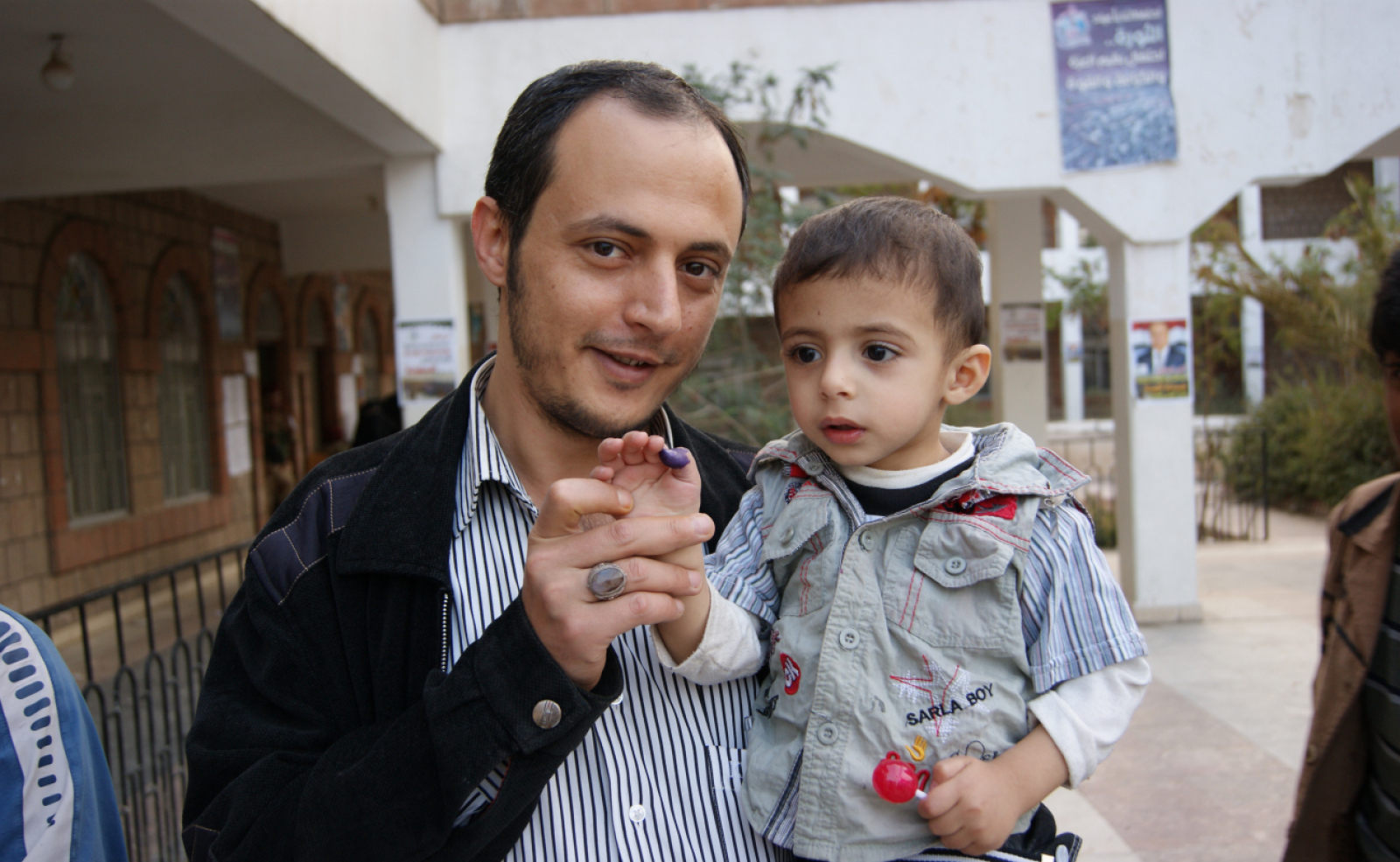
The agreement also required that a presidential election be held within 90 days of the signing of the agreement. Although political elite among the ruling party and the opposition agreed to nominate Vice President Hadi as a consensus candidate, an election was held to formalize his position, and on Feb. 21, Yemeni voters took to the polls to provide Hadi with a mandate to lead the country’s planned two-year transition. With only one candidate on the ballot, many predicted widespread apathy and low participation. However, the election drew larger numbers than anticipated and election related violence was lower than originally feared. The official count – 6.6 million votes – was delivered by the Supreme Commission for Elections and Referenda (SCER) on Feb. 23 and two days later, President Hadi was inaugurated before the parliament.
Following the February 2012 consensus elections, Yemen’s new national unity government entered the second phase of the two-year political transition mandated by the GCC agreement. The agreement defines key benchmarks for the two-year transition period, including a National Dialogue Conference (NDC). After several delays, Yemen is anticipated to initiate the six-month national dialogue process in March 2013. Citizens are eager for the dialogue to start and have high expectations that it will alleviate decades worth of grievances.
NDI Programming
In Yemen, NDI has worked for two decades to support the development of representative and inclusive political systems. NDI began providing provisional assistance to the Republic of Yemen Government (ROYG) in 1993, assisting with the implementation of the country’s first multiparty parliamentary elections. Voter registration and election monitoring activities and assistance to fledgling civil society organizations continued throughout the turbulent years of the civil war and the subsequent parliamentary and presidential elections of 1997, 1999, 2003 and 2006. Since establishing a permanent presence in Yemen in 1999, NDI has expanded its work to include political party development, legislative support, local governance, civil society strengthening, women’s political participation, civic education and tribal conflict mitigation. NDI’s long-standing relationships with government officials, political parties and civic leaders have earned the Institute a favorable reputation as a leading organization in Yemen on democratic issues.
Public Dialogue

October 2012 town hall meeting
Working alongside the National Dialogue Conference General Secretariat (CGS), the Institute is facilitating a series of nationally-televised town hall meetings that convene civic and political party activists, national dialogue leaders and members of the media for an organized public discussion about Yemen’s political transition. During the town hall meetings, a panel of civic and political leaders and international experts discuss specific transition-related issues, taking questions from the audience and from the general public by text messages and Facebook. More than 150 Yemenis representing each of the country’s 21 governorates attended the first town hall meeting on Oct. 16, which focused on the process of the national dialogue. Attendance exceeded 200 participants in subsequent town halls, which addressed unemployment and the economy, transitional justice, local governance and women’s political participation. In addition to being broadcast on national and international television, NDI received more than a thousand text messages from Yemenis around the country to take part in the public debate. NDI has compiled the public’s comments and concerns expressed at the town hall meetings and presented them to the National Dialogue Conference Preparatory Committee to consider as they determine the rules and procedures of the six-month conference.
Civic Education
Currently, NDI provides citizens with information on political and electoral reform models to encourage the electorate to make informed contributions to the national dialogue and the greater transition process. The Institute facilitates civic education forums with a variety of key interest groups, including civic and political party activists, public opinion leaders, members of the media, university students and tribal sheikhs. Recent forums have focused on the benefits and challenges of election systems being considered in Yemen, as well as possible amendments to the current election law.
NDI has publicized information on electoral systems and political systems through online videos, which are a component of the Institute’s Demowatin (a contraction of “Democracy of Citizens”) initiative to provide civic and voter education through traditional and social media.
Women's Political Participation

A women's voter registration center
The Institute worked with women candidates before the 2003 and 2006 elections, and has facilitated dialogue among women candidates, political parties and the Supreme Commission for Elections and Referenda (SCER) to develop legal and regulatory measures that provide greater access to the electoral process for women candidates and voters. One result of those efforts was the formation of the Women’s Department within the SCER in 2005. The department was established to ensure that SCER initiatives and departments incorporate strategies to increase women’s political participation, and to coordinate with political parties and other Yemeni institutions to promote stronger participation in elections by women.
In advance of the National Dialogue Conference, NDI convened women party leaders to help them develop messages and build alliances in support of robust women’s participation in the dialogue. At the request of women party leaders, NDI also supported the reconstitution of a cross-party women’s network that seeks to establish relationships across political lines, build consensus on policy issues of importance to women and ensure that women have active roles in the transition process.
In preparation for upcoming parliamentary and/or presidential elections, anticipated for early 2014, NDI will host a series of campaign academies across Yemen for potential women candidates and campaign managers to improve women’s standing in elections. Focusing on campaign management and strategy, the academies will draw on women’s experiences in previous elections in Yemen to directly address the challenges they face, such as candidate nomination procedures that discriminate against women, insufficient financial support from political parties and public perceptions of women in politics. NDI is also working with political parties to promote women within the party structure by developing tailored platforms and voter outreach.
The Islamists Are Coming: Who They Really Are
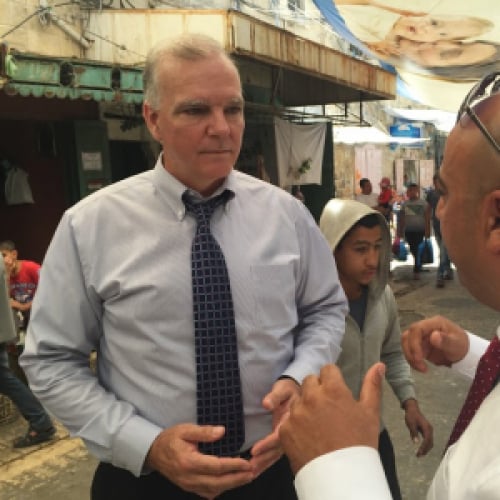
Les Campbell, NDI senior associate and regional director for Middle East and North Africa programs, authored a chapter about Yemen in the 2012 book, The Islamists Are Coming: Who They Really Are. The chapter, "Yemen: The Tribal Islamists," follows the history of Islah, the country's Islamist party, and surveys some of its policy positions.
Political Party Development
Since the 2003 parliamentary elections, NDI has worked with political party leaders to better communicate, participate in the electoral process and engage in open, constructive and inclusive debate. Following the 2006 presidential and local elections, NDI held a series of strategy and policy planning sessions with the central and branch leadership of the ruling and opposition parties to aid them in developing cohesive, policy-based platforms, and held multiparty sessions for women party members and youth activists to help them within political parties and across party lines.
The Institute is currently working with established and emerging political parties to review and define party positions on political process reforms, and negotiate across party lines to reach consensus on a vision for a reformed political and election system following the transition. NDI also is working with party leaders to ensure that women and youth members are integral participants in the process, and is encouraging parties to develop platforms that address issues of specific concern to women, youth and other key groups.
Conflict Mitigation
Ongoing tribal conflict has prevented government institutions from functioning effectively in certain areas of Yemen, hampered participation in elections and activities of local governing bodies and hindered local development. In March 2005, tribal sheikhs approached NDI for assistance in developing strategies for ending conflict in their districts. NDI conducted extensive research to gain insight on community opinions, tribal structures, processes and norms and found an overall desire for greater government participation and partnership in addressing conflict in tribal areas. As a result, NDI worked with government institutions and public officials at the national, governorate and local levels, as well as Yemeni tribal leaders and other influential social figures, to develop mechanisms to resolve conflicts collaboratively in three target governorates. The early days of the program are highlighted in a 2005 Pulitzer Prize winning series in The Washington Post.

Marib Youth Council Members, March 2012
Within the tribes, young people are particularly affected by, and increasingly engage in, violent conflict. In 2010, NDI helped establish youth councils in Marib and Shabwah governorates designed to foster relationships between youth and local leaders and provide a constructive role for young people in mitigating conflicts in their communities.
Comprised of young men and women under the age of 30 and representing the tribes and sub-tribes in their communities, the inaugural youth councils resolved 12 tribal conflicts; established peer mediation teams in 20 local schools; contributed to sermons on conflict prevention in area mosques; and reached more than 2,500 citizens through conflict prevention awareness campaigns, all within the first two years. Results of the program show that when given a formal role, young men and women will work with local leaders to implement creative problem-solving solutions that have the potential for immediate impact on conflict prevention. For example, during the 2011 political unrest, the Marib youth council successfully advocated to the Al Juba Local Council and the district’s education director to reopen schools closed due to instability in the region. As a result of their efforts, eight schools immediately re-opened, and teachers volunteered to return to their classrooms without payment. Providing a safe learning environment has encouraged greater student attendance as peer mediation teams, established by the council in district schools, have helped reduce the number of reported conflicts among students by more than 75 percent.
Civil Society Strengthening
Past NDI programs have focused on strengthening civil society, including nongovernmental organizations, civil society associations and journalists. NDI has supported civil society organization (CSO) anti-corruption initiatives; worked with Yemeni journalists to report on and analyze government and political processes; and helped CSOs with sustainable improvements in their organizational structures and operations to increase the impact of their work.
During the political transition, NDI is working with local partner organizations to advocate for electoral reform, monitor voter registration and elections, hold the national dialogue accountable to its mandate and report on the implementation of political and electoral reforms resulting from the dialogue.
Consensus Building with CSOs and Political Parties

Political party and CSO leaders developing a position paper on preferred political and electoral models
During the transition period, NDI is working with CSOs and political parties to evaluate the benefits and challenges of political and electoral systems and choose the systems that most align with their respective goals. Civic and political activists have been able to reach consensus on political and electoral models for Yemen, and with the Institute’s assistance, composed a joint-position paper that will inform debate during the national dialogue.
At the request of the Ministry of Legal Affairs, NDI initiated a series of discussion forums for civil society, political parties, tribal sheikhs and religious leaders to engage in constructive, meaningful debate on a draft law on transitional justice and national reconciliation. In all, 161 civic activists, 13 political parties , 143 tribal leaders representing four major Yemeni tribal factions, and 178 religious clerics representing four major religious factions (Zaydis, Shafi’is, Salafis and Sufis) took part in the forums. Broad recommendations resulting from the four forums include: facilitating more robust engagement and discussion of reconciliation issues; providing opportunities for victims and perpetrators of injustice to meet and discuss grievances; and continuing efforts to ensure that the law is drafted based on a reasonable degree of consensus. In response to initial feedback from these forums and follow-on forums conducted by participating CSOs, the Ministry of Legal Affairs amended 13 of the 16 articles in the draft and released a revised version for an additional 30-day public comment period. The legislation was subsequently referred to the office of President Hadi, and, consistent with the framework of the GCC agreement, it is likely that the president will refer the issue to the anticipated national dialogue for broader discussion.
Parliamentary Outreach

Public hearing on pesticide and water legislation in Hodeidah, May 2012
To help strengthen parliament, NDI focuses on enhancing parliamentarians' ability to legislate, implement regulatory authority and fight corruption.
NDI has worked to strengthen core skills of MPs and develop the professional capabilities of parliamentary committees since 2000. The Institute works with a multipartisan group of parliamentarians to increase their abilty to influence the policymaking process and address constituent needs at the national level. As a result, participating members developed new parliamentary by-laws for holding public hearings and held the first in the nation.
NDI is currently supporting parliamentary committees that will have jurisdiction for drafting, amending and/or reviewing legislation emanating from the national dialogue and constitutional drafting committees. The Institute also will work with parliamentary staff to analyze transition-related draft laws, such as legislation on elections systems, political systems and transitional justice and national reconciliation.
Election Monitoring
Since 1993, NDI has conducted election-related activities in Yemen at the local and national levels. The Institute has worked with local partner organizations and government institutions, including the SCER, to train domestic poll watchers, enhance transparency and credibility, promote public confidence and develop systems to verify the official vote count on election day. In 2006, NDI began to support a network of local CSOs, the Yemen Election Monitoring Network (YEMN), as it monitored electoral reform processes, informed the electorate on electoral issues, and gathered voter input as new rules are developed, amended and implemented. The network has monitored several electoral events and issued reports of their findings, including the November 2008 voter registration process (English; Arabic) and the February 2012 presidential election.
In 2013 and 2014, NDI will continue to support YEMN as it monitors the voter registration period, constitutional referendum process and parliamentary and/or presidential elections.
Public Opinion Research
NDI has used opinion research to assist parties, politicians and civil society activists in identifying priorities and defining activities to address key issues. Currently, the Institute is working with local partners to conduct quarterly opinion research to assess public attitudes of the transition process.
NDI In The News
In an op-ed in the Globe and Mail, NDI Regional Director for the Middle East and North Africa Les Campbell discussed the need for continuing political reform that started almost 20 years ago, with an emphasis on genuine power sharing, economic development, decentralization and rooting out corruption.
Contact Information
For more information about these programs, use our contact form or contact:
Washington, D.C.
Leigh Catherine Miles, Senior Program Manager
(202) 728-6304