image of a compass
NDI

The National Democratic Institute is a nonprofit, nonpartisan organization working to support and strengthen democratic institutions worldwide through citizen participation, openness and accountability in government.

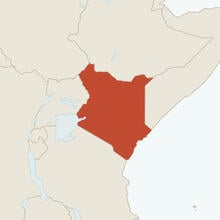
Kenya

Kenya Referundum 2005 (queue)

Political Situation

Kenya has seen significant political changes in the last decade. The historic 2002 transitional election, in which the National Rainbow Coalition (NARC) defeated the long-ruling Kenya African National Union, created a major political shift and inspired optimism among citizens about the future of their country as a multiparty democracy. Kenyans went to polls in large numbers for the December 2007 general elections, but the elections turned violent after accusations of electoral manipulation. More than 1,100 Kenyans died and more than 600,000 were displaced.

Peace was restored following the signing and enactment of the National Accord and the creation of the Grand Coalition Government (GCG), a power-sharing deal ending a political stalemate between President Mwai Kibaki of the Party of National Unity and Raila Odinga of the Orange Democratic Movement.  The National Accord also set out an ambitious reform agenda including a review of the country’s constitution. In August 2010, a largely fair and peaceful referendum resulted in passing a new constitution. The new constitution was a landmark achievement for the GCG as it enforces broad changes to the governance framework, including: a new devolved system of government; reduced presidential powers, a reformed electoral process, more defined separation of powers between the three branches of government; land reform; and an expanded bill of rights.

Going forward, government institutions, civil society, political parties and citizens face an ambitious and challenging period as they enact the reforms dictated by the new constitution. Kenya’s political dynamics also are likely to be influenced by the outcome of the International Criminal Court (ICC) proceedings in which six prominent Kenyans are accused of involvement in the 2007 post-election violence.  It is not yet clear whether the charges will be upheld by the ICC. Kenyan leaders are under increasing pressure to continue rebuilding their country and to avoid a repeat of the 2007 post-election crisis as the country heads into general elections in 2012.  

Current Activities

NDI has supported Kenyan efforts to strengthen democratic institutions and advance democratic reforms since 1993.  Programs initially provided skills training to women interested in politics and worked with nonpartisan civic groups to monitor elections.  Since 2001, NDI and its local partners have benefitted from the support of various donors, including the National Endowment for Democracy (NED), Department for International Development (DFID), the British Foreign Office, the Royal Norwegian Ministry of Foreign Affairs and the United States Agency for International Development (USAID).  

Political Parties

NDI has helped Kenya’s major political parties build consensus on issues of national importance, engage in dialogue with each other and the election commission, comply with the new constitution, and enhance their ability to represent citizens’ interests.

Through work with parties, NDI also helps identify barriers to women and young people's participation. The Institute supports to the Inter-Party Youth Forum, a platform that brings together youth from the main political parties in Kenya.   

NDI has contributed to the constitutional implementation process by supporting the participation of political parties and civil society organizations in the enactment of new legislation.  NDI is also implementing a leadership academy that trains potential candidates to better understand the new legal requirements and prepares them for running for office. 

Election Observation

In addition to its work with political parties, NDI works with the Kenyan Election Observation Group (ELOG), a coalition of 10 civil society organizations, to independently monitor electoral and political processes.  NDI helps ELOG implement scientific methods and new technologies to improve the speed and impact of its election monitoring.  During the 2010 constitutional referendum, NDI helped ELOG use short message service (SMS) technology to provide rapid reporting of both qualitative and quantitative information about the conduct of the referendum. 

Before the 2012 elections, NDI is helping ELOG with its ability to observe the election over the long-term. ELOG will monitor and report on political and electoral violence, participation of traditionally underrepresented groups in the electoral process, the use of money in politics, and voter registration.  NDI also helps ELOG and partners use mapping technology to visualize and analyze election information.

Contact Information

For more information about these programs, use our contact form or contact:

Washington, D.C.
Alison Paul DeSchryver, Program Manager
(202) 728-5410

  Subscribe to updates about Kenya