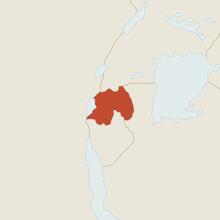
Though politics in Rwanda have been dominated by the ruling Rwandan Patriotic Front (RPF) since the 1994 genocide, the country’s 2003 constitution includes measures aimed at strengthening multi-party representation in government structures. The RPF has claimed large victories at the ballot box, for example, but can only hold one-half the cabinet seats. The prime minister, and the speaker of Rwanda’s Parliament are required to come from different parties than the president. Rwanda’s system of mandating female representation in decision-making bodies led to the election in 2008 of the only legislature in the world where women are in the majority.
Freedom House ranks Rwanda as “Not Free” and the country’s poor scores for civil liberties, political rights and voice and accountability have prevented it from qualifying fully for funding from the Millennium Challenge Corporation (Rwanda is currently classified as a “threshold country”). The perception that political parties helped citizens organize and participate in the genocide make many Rwandans reluctant to participate actively in politics, especially if they hold views counter to stated government or RPF positions. The national emphasis on unity and consensus has limited parties’ abilities and desire to develop competing, issue-oriented messages. In the 2008 legislative elections, the RPF gained an even greater majority than it did in 2003, at least in part because the other eight competing parties failed to offer meaningful alternatives to voters. Since the election, however, three political groups have registered or announced their intent to register as political parties.
Current Activities
In October 2008, NDI began a USAID-funded political party strengthening program. The program supports and reinforces mechanisms that promote inter-party dialogue; and strives to develop the organizational, communication and outreach capacities of Rwandan parties, especially at a grassroots level. In order to carry out these activities, the program capitalizes on a May 2007 law permitting political parties to organize themselves at a local level for the first time since the genocide.
In close collaboration with Rwanda’s Consultative Forum of Political Organizations, NDI is conducting capacity-building workshops for regional political party activists, while sponsoring multiparty dialogue and party leadership development at the national level. Through the seminars and workshops, party leaders learn about the roles and functions of political parties in a democratic system and hone techniques for recruiting women and youth, building a stronger membership base, communicating, and delivering persuasive messages. More than 400 party officials have benefitted from these workshops. The Institute has also worked with the Forum and its constituent political parties to integrate information communication technologies (ICT) into outreach strategies.
Past Programs
In 2003, NDI conducted a limited program intended to foster political party dialogue in support of Rwanda's political transition. The Institute sent an assessment team to the country in August 2003 to analyze the country’s political environment on the eve of the 2003 elections. The team found that despite the establishment of a multiparty political system following the genocide, tight political control exercised by the transitional government had impeded the democratic process by limiting opportunities for public debate and the exchange of different points of view. The assessment team’s findings and recommendations were included in a report that received wide distribution.
In November 2003, NDI hosted a two-day post-election roundtable, the first neutral forum for Rwandan political party representatives since the election. Approximately 40 key actors involved in Rwanda's election process participated in the event. Designed to defuse post-election tensions and promote trust and cooperation between political actors from different backgrounds, workshop facilitators moderated a structured dialogue that allowed participants to discuss contentious political issues in a peaceful and nonthreatening environment.
Funding
NDI’s current program in Rwanda is funded by the United States Agency for International Development (USAID).
Contact Information
For more information about Rwanda, use our contact form or contact:
Rwanda
Gaston Ain, Resident Country Director
gain@ndi.org
Washington, D.C.
Grant Godfrey, Program Manager
ggodfrey@ndi.org
Photo courtesy of:


Subscribe to updates about Rwanda