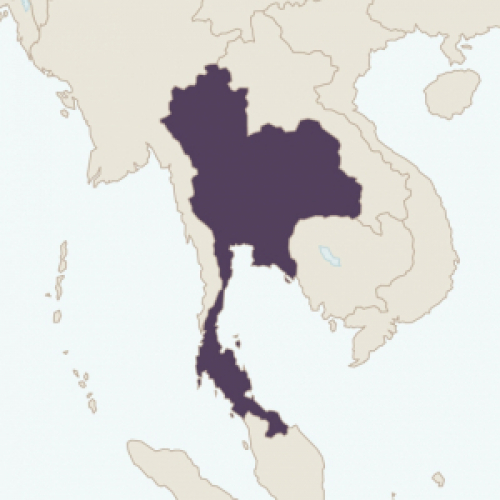
NDI has promoted democratic development in Thailand since 1994, conducting programs to strengthen civil society, political parties and democratic institutions. From 1998 to 2000, the Institute helped civic groups to monitor elections and conduct provincial campaigns on anti-corruption. From 2001 to 2004, NDI involved Thai political party leaders in a regional program that brought together party leaders and reformers from across Asia to share and develop strategies to combat corruption and support greater accountability and internal democracy within parties. In October 2006, NDI conducted an assessment of the political environment in Thailand. NDI consulted with a broad range of political party members, civil society leaders and members of the military-appointed government. Based on the assessment findings, NDI launched a program in 2007 to support citizen and political party participation in reform processes under Thailand’s interim government.
Political Situation
In the July 2011 elections, the Pheu Thai Party (PTP) won a landslide victory. In August 2011, Thailand’s parliament elected Yingluck Shinawatra, leader of Pheu Thai and younger sister of former Prime Minister Thaksin Shinawatra, its first woman prime minister. The PTP was joined by the Chart Thai Pattana and Ruam Jai Chart Pattana parties in forming the government. Although Yingluck proved a popular candidate, many opponents claim Thaksin remains in charge, and many Thaksin allies have been appointed to the cabinet. Despite the challenges faced by the new government, the prime minister has vowed to work independently for all Thai people and to promote reconciliation within society.
These recent events come after extensive political turmoil in Thailand in recent years. In 2006, then-Prime Minister Shinawatra was ousted by a coup. Following the coup, a military junta instituted an interim constitution, outlining a one-year transitional period that included drafting a new constitution, approving the constitution through referendum and holding elections. In August 2007, more than half of the 45 million eligible voters went to the polls to participate in the referendum. Overall, the referendum was administered efficiently and non-violently. Allegations of vote-buying and exerting undue influence on voters in the run-up to the vote were not considered serious enough to have affected the election outcome.
With the passing of the new constitution, parliamentary elections were scheduled for December 2007. Voter turnout was 74.5 percent, the highest in Thailand’s history. The elections were deemed “free” and “fair” by international observers, and the People’s Power Party (PPP), the successor to former Prime Minister Thaksin’s disbanded Thai Rak Thai Party, successfully formed a coalition within parliament.
In December 2008, the Constitutional Court disbanded the PPP and two of its coalition parties on electoral fraud charges, allowing the Democrat Party (DP) to secure a coalition within parliament. With the support of the Buriram faction of the former PPP and other parties in parliament, DP leader Abhisit Vejjajiva became prime minister in January 2009.
In a spring 2010 bid to oust the government and demand fresh elections, the United Front for Democracy Against Dictatorship began protesting in Bangkok. An attempt to move the protestors resulted in 10 deaths, and a further crackdown by the army resulted in a violent confrontation that left 81 dead. The government declared a state of emergency after the unrest in Bangkok and in several other provinces. This state of emergency lasted in several provinces for eight months.
Current NDI Programs
Since 2007, the Institute has worked on programs to restore democratic institutions, strengthen and promote political party development and increase dialogue between elected officials and constituents.
NDI’s current National Endowment for Democracy-funded program promotes citizen participation in political processes and strengthens the relationship between citizens and newly elected representatives. Together with the King Prajadhipok Institute and the Political Development Council, constituency dialogues aimed at increasing citizen participation are being coordinated to address concerns in 12 target provinces.
Funding
NDI programming in Thailand is funded by the National Endowment for Democracy (NED) and the United States Department of State’s Bureau of Democracy, Human Rights, and Labor (DRL).
Contact Information
For more information about these programs, use our contact form or contact:
Bangkok
Deborah Healy, Program Director
+66 89 0669865 or dhealy@ndi.org
Washington, D.C.
Lorri Carrozza, Senior Program Officer
(202) 728-5455


Subscribe to updates about Thailand