Young Palestinians Sit Down to Discuss the Upcoming Elections
Success Story
A Generation Steps Up: Palestinian Youth Reclaim the Democratic Horizon
The call for local elections in the West Bank on April 25, 2026, has provided a rare opportunity for public debate on Palestinian political life. Reactions have ranged from cautious optimism to sharp critique. Much of the controversy centers on a new legislative requirement that candidates sign a commitment to past agreements made by the Palestinian Authority and the Palestinian Liberation Organization (PLO)–a condition that has prompted several civil society organizations to call for a boycott. Yet for many young Palestinians, these elections are not a point of contention, but an opportunity to claim their stake in a system that has long felt out of reach. For many members of the National Democratic Institute (NDI) alumni network, particularly youth, this moment offers something more concrete: a transition from observers of political life to active participants and candidates ready to lead in their communities.
Structural Shifts and the End of the Status Quo
This surge in youth engagement is fueled by structural reforms that have lowered the barriers to entry. With the candidacy age now reduced to 23 and the shift to an open-list system for local councils, the traditional dominance of large families and established political parties is beginning to wane. These changes are creating a more level playing field–one where merit and fresh perspectives can compete with legacy power structures. Many Palestinians will be voting for the first time, and this transition from observer to candidate is no longer a distant dream, but a practical reality.
From the Classroom to the Ballot Box
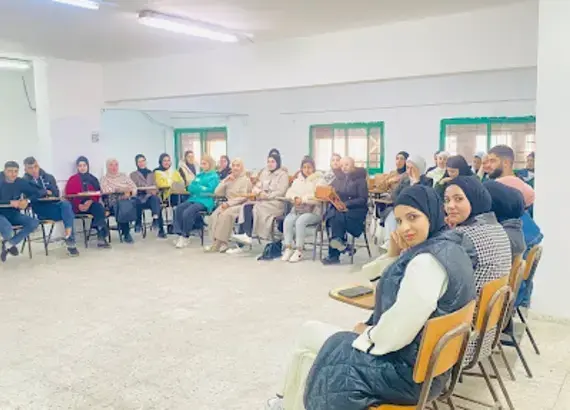
Over many years of investment in civic education, including through programs like "Ana Usharek" (I Participate), NDI has encouraged a culture of active leadership. The impact of that sustained investment was recently on full display in the Hebron governorate, where student alumni at Al-Quds Open University and Palestine Polytechnic University took the initiative to organize and facilitate meetings to discuss how to translate their training into the real-world skills and acumen of running for office or supporting local campaigns.
The Architects of a New Era: 900 Voices for Reform
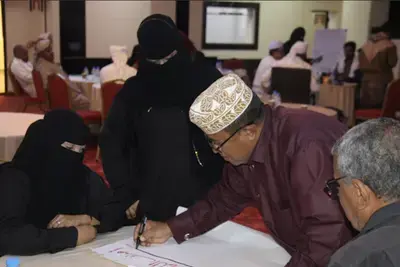
The hunger for practical political skills and opportunities was recently demonstrated in a separate instance. In March 2026, NDI launched a pilot project titled "Enhancing the Role of Political Activists in Palestine" as part of a National Endowment for Democracy (NED)-supported program to support new and emerging reform-minded political movements across the Middle East. Despite only having 30 available spots for the initial cohort, the program received 936 applications. This massive response, nearly 30 applicants for every single seat, shattered expectations and underscored a profound demand for the tools needed to advocate for political reform.
To meet this energy, NDI conducted a series of "Ramadan Nights" preparatory meetings. Drawing on real-world, anonymized case studies, these sessions helped participants navigate the "glass ceiling" of traditional politics and the complexities of governing under occupation. The final cohort of 30 activists represents a precise cross-section of the Palestinian future:
- Gender Parity: A 50/50 split between men and women.
- Youth-Led: 77% of the participants are under the age of 35.
- Geographic Breadth: Representatives from all 11 West Bank governorates, including Jerusalem.
Participants worked through real-world scenarios, identifying systemic barriers facing marginalized communities–including women–and developing strategies to amplify their ideas in existing political discussions. Participants noted the importance of supporting one another and building coalitions. As one participant put it: “I’ve lived through situations like the ‘glass ceiling’ case. Hearing others discuss it helped me realize it’s not just my individual experience—it’s a systemic challenge that many women face.”
A Shared Vision for Sustainable Change
These examples demonstrate that a desire for change does not rely on top-down mandates. Organic, student-led and community-driven initiatives are taking root even in a challenging political context. Deans of Student Affairs at universities that had previously hosted Ana Usharek programs have noted a tangible shift in the competence and confidence of these participants, who now navigate political discourse with a sophisticated understanding of how institutions work and how to change them.
By equipping this cohort with advanced frameworks like transformative leadership, NDI is helping them build a "shared theory of change." As these young leaders prepare to participate in local elections in the West Bank, they carry more than just a desire for reform. They carry technical skills, documented action plans, and the civic courage to ensure that Palestinian democratic life evolves to meet the needs of a new generation.

More Success Stories
View All 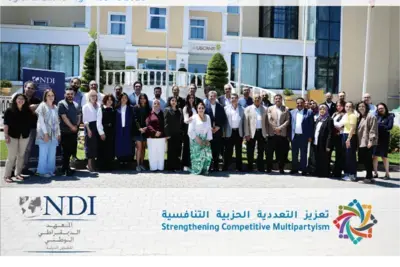
Middle East and North Africa