Paulina Chavez
Press Secretary
[email protected]
Resources
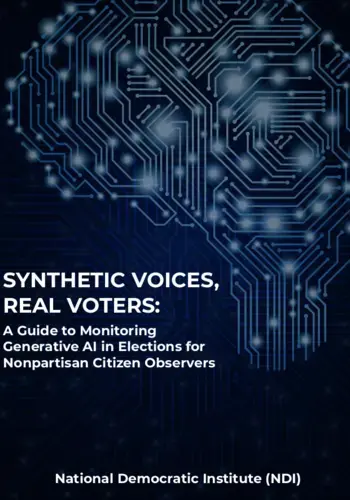
Democratic elections rely on a competitive process, faith in electoral institutions, and informed participation by all citizens. However, the ability of voters to make choices based on complete and accurate information is increasingly strained by a fractured and frenetic information environment. This is exacerbated by the emergence of widely available generative Artificial Intelligence (“genAI") tools. The uptick of genAI-enabled campaign tactics, realistic synthetic political content online, and the use of chatbots for basic tasks and information complicate electoral dynamics during an already fragile moment. Electoral watchdogs such as election observers also need to understand the impact of this new dimension.
This guide is designed to help observers put genAI into context, and support evidence-based findings on its prevalence and impact, not assume the worst. This guide will cover key definitions, practical methodologies, tools, and considerations for further adaptation and planning, as the technology and trends around generative AI and its use are constantly evolving. The guide is specifically designed for nonpartisan citizen election observers safeguarding their own electoral processes, and to ensure fundamental freedoms, including freedom of expression, are protected. It focuses on methodologies that are achievable and not resource-intensive, with additional guidance on how AI-threats can be integrated into pre-existing monitoring strategies.