
Election Statement
Resources
Democracy When You Need It Most: Strengthening Legislative Transparency and Accountability During Crises
The COVID-19 pandemic is an unprecedented global crisis still sending shock waves across public health systems, governance structures and markets. In response, parliaments had to quickly adapt to the new environment by not only adjusting their procedures and operations to respond to quarantine demands, but also passing legislation to address the emergency.

Elections Watch Committee's Observation of the 2021 Gambian Presidential Election
On Saturday, December 4, 2021, The Gambia held its first presidential election since its democratic transition from authoritarian rule in 2017. To ensure the public was informed about election preparations and to build confidence in the election process, NDI supported the country’s first long term citizen election observation group, Peace Ambassadors - The Gambia (PAG), to systematically observe and report on the pre-election and election period.
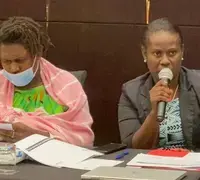
In Pursuit of Inclusive Peace: New Report on Women’s Inclusion in the PNG-Bougainville Consultations Process
After 20 years of civil war between the region of Bougainville and Papua New Guinea (PNG), Bougainville voted for independence from PNG in a 2019 referendum conducted as part of a peace agreement ending the conflict. Since then, the PNG National Government and Autonomous Bougainville Government (ABG) have embarked on a post-referendum consultation process to decide the political future of the province.
Preparing for the Next Crisis: Developing a More Effective Crisis Management System
The Crisis Management simulation exercise was informed by the findings of the National Democratic Institute's flagship crisis management assessment, “North Macedonia's Crisis Management Response to the COVID-19 Outbreak” as well as the European Union’s Peer Review Report of the Republic of North Macedonia’s crisis management system in 2018.
Shaping an Inclusive Narrative about the Effects of COVID-19 in the Pacific Islands
The COVID-19 pandemic has impacted the world in ways unimaginable more than a year ago. Due to their ethnicity, gender, religion, age, or social status—or at the intersection of these identifiers—some people in the Pacific Islands and around the world are vulnerable to disproportionate impacts that compound health, psycho-social, and economic risks.